
What Is SOL in Crypto? Why You Need It Before Buying a Solana Meme Coin

SOL is the native coin of the Solana network. Every action on Solana, including buying, selling or sending $CATE, costs a small fee that can only be paid in SOL. So you need a little SOL first.
That one fact is behind a lot of confused first days. People buy a token, spend nearly all their SOL doing it, and then find they cannot move what they bought.
Solana is the network, SOL is its coin
Solana is a blockchain, which means a shared public record of who owns what, kept by many computers instead of one company. Solana’s own site describes it as “a high-performance network that enables fast, secure, and affordable digital transactions.”
SOL is the coin that belongs to that network. Solana’s glossary calls it “the native token of a Solana cluster”, and a cluster here means the network. Native means it is built into the network itself. Everything else you hold on Solana, $CATE included, is a token that somebody created on top of it.
Think of Solana as a toll road. Every trip on it, whatever you are carrying, pays its toll in the road’s own coins. SOL is those coins. You cannot pay the toll in $CATE, in dollars or in anything else.
SOL also splits into very small pieces. The smallest piece is called a lamport, which Solana defines as “a fractional native token with the value of 0.000000001 sol.” A billion lamports make one SOL. You will rarely see the word, but fees are counted in it, which is why a fee can look like a big number and still be almost nothing.
People sometimes say “Solana” when they mean the coin, and the two names are used loosely online. On an exchange (a company that buys and sells crypto for you) or in your wallet (the app that holds your coins), the coin is listed as SOL.
The three jobs SOL does in your wallet
Once you have a Solana wallet, SOL turns up in three places. Only the first one is unavoidable.
| Job | What it means | Do you need it? |
|---|---|---|
| Paying fees | Every transaction on Solana carries a small fee paid in SOL | Yes, always |
| Swapping | $CATE mainly trades in a pool that swaps it for SOL | Usually, to buy and sell |
| Staking | Committing SOL to one of the computers that run Solana, in return for rewards | No, it is optional |
The fee job is the one Solana states most plainly: “Every Solana transaction requires a fee paid in SOL.” Half of the basic fee is destroyed and half goes to the computer that processed your transaction, according to the same page.
The swapping job is about where $CATE trades. A pool is a shared pot of two coins that lets anyone trade one for the other without a middleman. The main $CATE pool, on a trading venue called PumpSwap, pairs $CATE with SOL, according to the chart site DexScreener’s listing as of 26 October 2026. So for most people, buying $CATE means trading SOL for it, and selling means getting SOL back.
Staking is the optional one. Solana says “SOL token holders can earn rewards and help secure the network by staking tokens to one or more validators.” A validator is one of the computers that keeps the network running. You never need to stake to hold or trade $CATE.
Why a wallet full of $CATE can still be stuck
This is the trap. Your wallet might hold a large amount of $CATE and almost no SOL. To sell, send or move any of that $CATE, the network still wants its fee, and it only accepts SOL.
If the SOL is not there, the transaction fails. The $CATE is still yours and still in your wallet. It cannot go anywhere until a little SOL arrives to pay the toll.
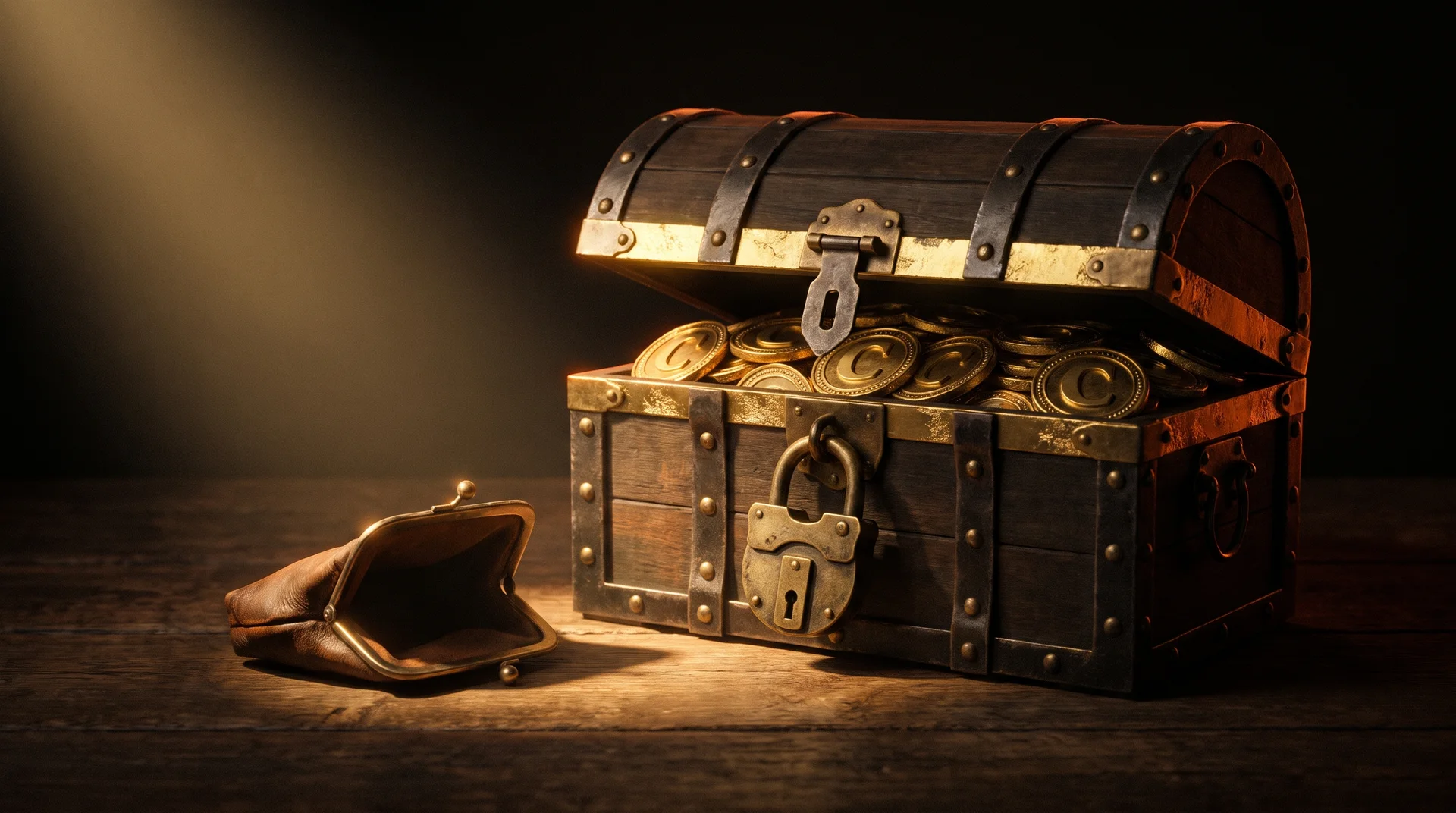
This usually happens on the first purchase. A new buyer sees a SOL balance, swaps almost all of it into $CATE, and leaves too little behind. The swap works, and the next transaction does not.
There is one partial exception worth knowing about. In crypto, network fees are often called gas. Solflare’s help centre describes a feature called Gasless Send. It says: “If you try to send a token but don’t have enough SOL to cover the network fee, Solflare automatically covers it for you.” The fee is then taken from the token you are sending instead. That covers sending in that one app. It does not change the rule for the network as a whole.
The fix, if you are already stuck, is to send a small amount of SOL into the wallet from an exchange or another wallet you own. It needs to go to your own Solana address, not a token’s address. Our guide to what a contract address is explains the difference.
The small deposit the first time a new token arrives
There is a second cost that surprises people, and it happens once per token.
Your wallet keeps each kind of token in its own small storage slot on Solana. Solana’s token documentation says a wallet needs “a token account for each token” it holds. The first time $CATE arrives in your wallet, that slot has to be created.
Creating it needs a small amount of SOL set aside, which Solana calls rent. The name is misleading. Solflare’s help centre explains that “despite the name, it functions more like a refundable deposit than an ongoing fee.” It puts the usual amount at “around 0.002 SOL.”
The deposit can come back. In Solflare’s words, when a token account is closed, “the SOL that was reserved for rent is returned to your wallet balance.” So it is money parked, not money spent.
For a first purchase, this means the SOL you need is a little more than the fee alone. It is still small, but it is one more reason not to swap every last bit.
How much SOL to keep, and why it is not much
The amounts involved are small enough that the safest habit is easy: always leave some behind.
Solana’s fee page gives the basic fee as “a base fee of 5,000 lamports per signature.” A signature is your wallet’s approval, and a basic transfer usually has one. With a billion lamports to one SOL, that is five millionths of a SOL. Solflare describes fees as “usually a fraction of a cent per transaction.” Solana also allows an optional extra fee, called a priority fee, which its documentation says “increases the likelihood” that your transaction is processed sooner.
Solflare suggests keeping “at least 0.01 to 0.05 SOL” in your wallet, even if you do not plan to use it. That spare is at least two thousand times the basic fee. It covers the deposit for a new token, the fee to sell, and a few failed attempts besides.
What that is worth in dollars changes every day, so we will not print a figure. Check the SOL price on the exchange you use. Live $CATE figures are on the stats page.
If you decide to buy, the order is: get SOL into your wallet, keep your spare, then swap the rest. The full steps are on how to buy $CATE, which we will not repeat here. When you sell a meme coin, you usually receive SOL back, and turning that into money in a bank is a separate set of steps covered in selling is not cashing out.
Frequently asked questions about SOL
SOL is the native coin of the Solana blockchain. It is built into the network and is the only thing Solana accepts as payment for its transaction fees. Other coins on Solana, like $CATE, are tokens created on top of the network.
Not quite. Solana is the network, and SOL is the coin that runs on it. People use the names loosely, but exchanges and wallets list the coin as SOL.
Yes. You need SOL to pay the network fee on every transaction, and the main $CATE pool trades $CATE against SOL. Keep a small amount spare after you buy so you can sell or move your tokens later.
Your wallet does not have enough SOL to pay the network fee, or to cover the small deposit needed the first time a new token arrives. Send a little SOL to the wallet’s Solana address and try again. Your other tokens are not affected.
No. A meme coin is a token whose value rests on a joke, a mascot or a community, and we explain that in how meme coins work. SOL is the coin the Solana network itself uses to pay for transactions.
A three-step SOL check before any swap
If you decide to buy, check one thing first: does your wallet have SOL, and will some of it still be there afterwards? In order:
- Put SOL in your wallet first, sent to your own Solana address.
- Decide on a spare amount and leave it alone. Solflare’s suggestion of 0.01 to 0.05 SOL is a sensible floor.
- Swap only what is left over, using the steps on how to buy $CATE.
Do that and this first-day problem will not catch you. The toll is tiny. You only have to remember to keep a coin for it.
When you want to go a step further, check any Solana token yourself shows how to look up a token’s details on your own, without trusting anyone’s summary.
Sources checked 26 October 2026: Solana’s what is Solana, terminology, fees, tokens and staking pages; Solflare’s help centre on transaction fees and rent; and DexScreener’s listing for the main $CATE pool.
Official contract address · Solana
Ai66LHZG9MCzg1WKdawwqduVAXpNDUuV8M3uyq5ppump