
There Are Several Tokens Called CATE. Here Is How To Tell Them Apart.
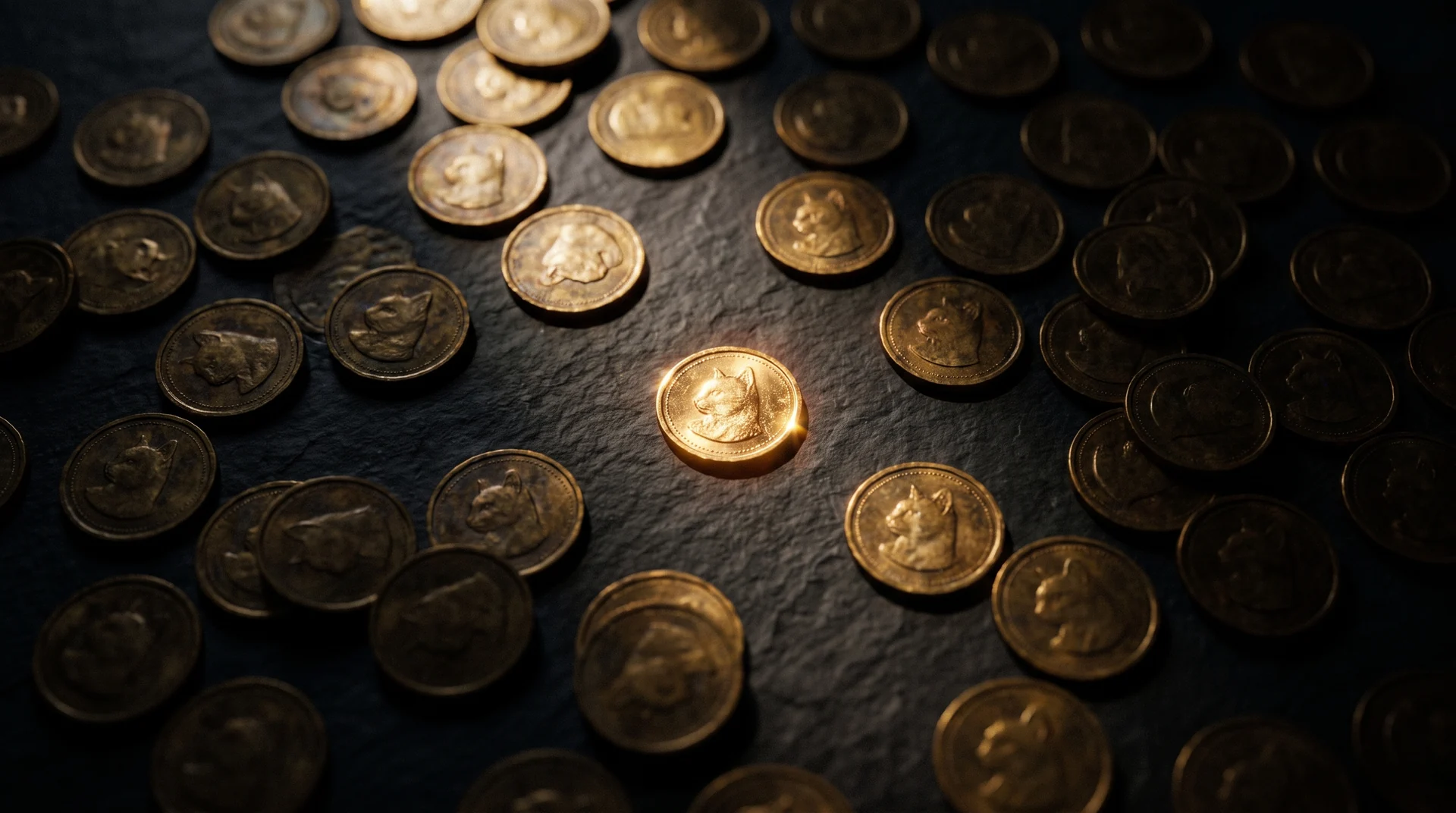
Search for “CateCoin” and you will get confident, well-ranked results about a project with a website, exchange coverage and years of history. Most of those results are about a token that is not the one people are looking for in 2026.
There are currently at least three distinct assets using the name CATE or Catecoin, plus exchange coverage that has become harder to attribute rather than easier, because more than one of them now trades under the ticker. This is not a scam in itself. It is worse in a way, because it is mostly just an accident of naming that scammers then take advantage of.
Here is how to tell them apart in about thirty seconds.
The short version
The Solana token that the Cate Army is built around has exactly one identifier that cannot be faked or duplicated:
Ai66LHZG9MCzg1WKdawwqduVAXpNDUuV8M3uyq5ppump
If a page, a listing, an exchange, or a link does not show that string, it is a different asset. Not a different website for the same thing. A genuinely different token that will not move in price with the one you meant to buy.
That address is the mint account on Solana, and it is the token’s actual identity in a way the name never is. Names are metadata. Anyone can deploy a token in a couple of minutes, call it Catecoin, upload the same artwork, and write the same description, and the blockchain will not object, because none of those fields are unique or claimed. The address is assigned at creation, it is unique by construction, and it cannot be transferred to a copy.
This is why experienced traders ask “what’s the CA?” instead of “what’s it called?” It looks like jargon. It is actually the only question that has a reliable answer.
The tokens sharing this name
| Which one | Chain | Identifier | Status, 9 Aug 2026 |
|---|---|---|---|
| Solana $CATE the one this site covers | Solana | Ai66…ppump | Launched 26 July 2026, roughly $4.9M traded in 24h |
| CateCoin (2021) | BNB Chain | 0xe4fae…d998f | Live since 2021, about $4.1M market cap but only around $4,300 traded in 24h |
| A second Solana “Catecoin” | Solana | Bp7wS…y9Gp | Created Aug 2025, roughly $10K market cap, negligible liquidity |
| Exchange-listed “CATE” | Varies | Published by some venues | Resolved 4 Sep 2026: on MEXC, LBank, BingX and Gate this is the Solana token in row one. Gate’s separate CATECOIN ticker is the 2021 BNB Chain token |
Every figure above was read from public on-chain data on the date shown, and every one of them will have moved since. The contract addresses will not.
A fourth category is worth naming even though it cannot be tabulated: tokens that existed briefly, borrowed the name during a moment of attention, and no longer trade at all. One of the addresses that surfaced while researching this piece now returns no trading pairs whatsoever, meaning whatever it was, it is finished. Those failed copies do not disappear from the internet when they stop trading. Their pages, listings and screenshots stay indexed, which is part of why searching this name returns such a strange mixture of the current, the dormant and the deceased.
Why the wrong one ranks so well
The 2021 BNB Chain project has five years of accumulated search authority: inbound links, an established domain, an aggregator listing, and years of articles referencing it. Search engines reward that, and correctly so under normal circumstances.
The Solana token is two weeks old. It has effectively no search history at all, because demand for a two-week-old name has not been measured yet.
So the index is full, just not of the thing most people are currently searching for. Search engines are answering the question “what is the most established page about this name”, which is usually a good proxy for “what is the best answer”, and here it simply is not.
It is worth being precise about why that happens, because it is not evidence of anything on its own. The older project got there first and has ranked for years, which is exactly what search authority is made of. Nothing about the ranking itself is irregular. What it produces is simply an index that keeps answering a question most people typing this name today are not asking.
The gap between search authority and present-day relevance is unusually wide here, though, and it produces one specific, measurable oddity.
The older token trades roughly one one-thousandth of the volume of the newer one, while occupying most of the search results for the shared name. It is not dead exactly, it still carries a real market capitalisation, but almost nobody is trading it on any given day.
That gap is the entire problem. The results that look most authoritative are the ones describing the least active asset.
The mistake this actually causes
It would be easy to read all this as an abstract taxonomy problem. It is not. The confusion has a specific, repeatable failure path, and it ends with somebody holding an asset they did not intend to own.
Almost nobody sets out to buy the wrong token, and the people it happens to are not careless. The sequence that causes it is entirely mundane:
- Someone hears about a cat coin doing well on Solana.
- They search the name rather than asking for the contract address.
- They land on a well-ranked page about a different project.
- They buy what that page recommends, possibly on an exchange, and it is a genuinely different asset.
Nothing in that chain requires anyone to be careless or a scammer to be involved. It just requires trusting a search result, which is a thing everyone does a hundred times a day.
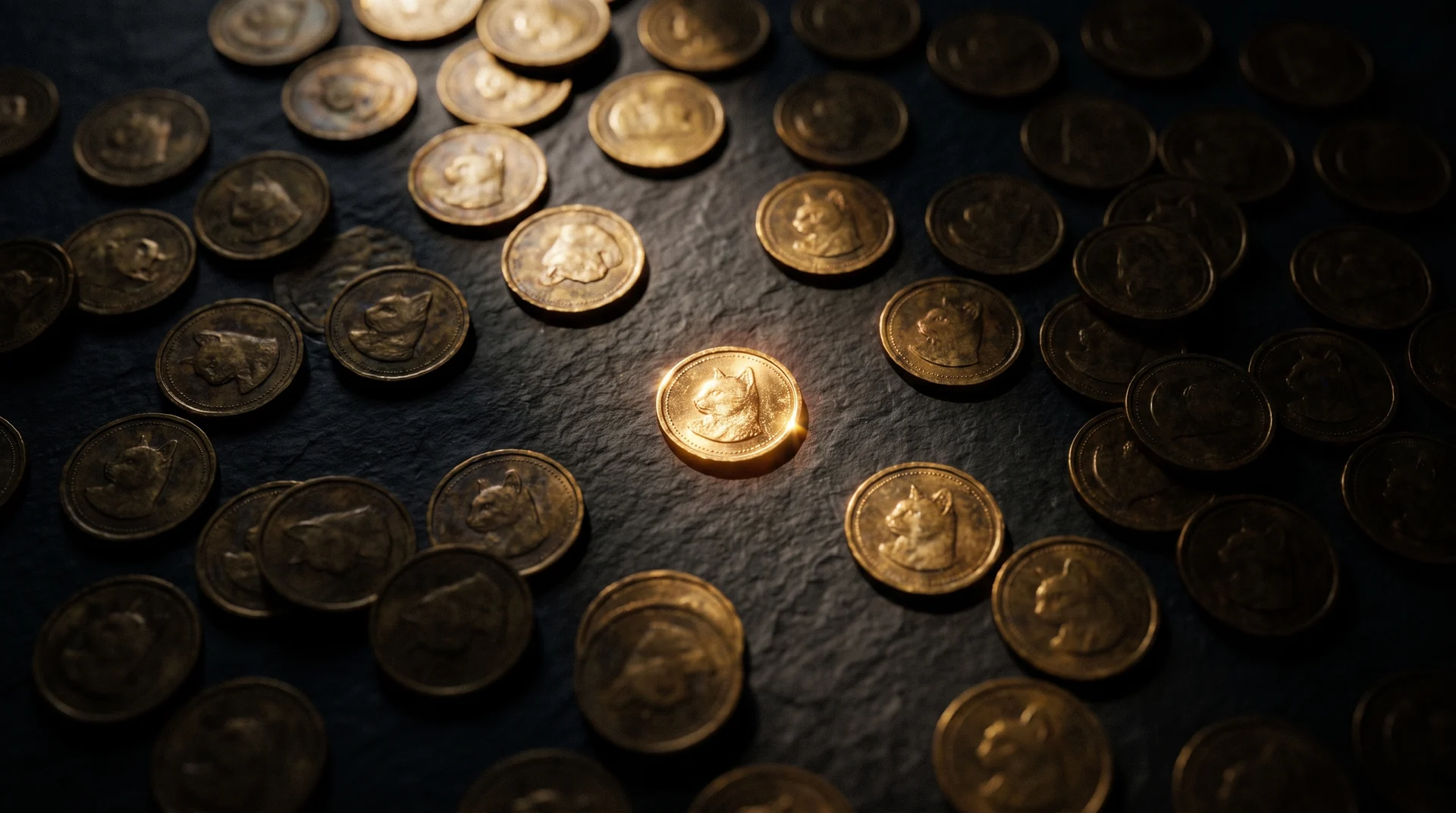
The scam version layers on top: bad actors know the name is contested, so they launch further tokens using the same name and logo and let the existing confusion do their marketing for them. They do not need to convince anybody of anything. They only need to be findable at the moment somebody is already looking, and the ambiguity handles the rest.
The financial consequence differs depending on which mistake gets made. Buying the dormant 2021 token means owning a real asset that is simply not the one you wanted, and you can usually sell it. Buying a freshly deployed copy with almost no liquidity can mean being unable to sell at any meaningful price, because there is nobody on the other side of the trade. The second failure mode is much worse and much harder to notice in advance, which is why the volume and liquidity check below is worth the extra ten seconds.
Checking, properly, in thirty seconds
The method is the same for any token on any chain, and it does not require trusting this page either. Each step below is something you perform yourself on a source you chose, which is the only kind of verification that actually means anything. Steps three and four exist because they catch the copies that step one alone would miss when somebody has been given a plausible-looking address to compare against.
| Step | What you do | What tells you it is wrong |
|---|---|---|
| 1. Get the address from two places | Compare what a community source shows against a block explorer or chart site you opened yourself | The two do not match, character for character |
| 2. Check the chain | Solana addresses are base58, roughly 44 characters, no leading 0x | An address starting 0x is on an EVM chain, so it is not this token |
| 3. Check the activity | Look at 24-hour volume and liquidity on a chart site | Near-zero volume on something described as trending |
| 4. Check the age | Compare the pair creation date against the story you were told | A 2021 creation date on a token described as launching this month |
Step one is the only one that is strictly necessary. The rest are for when something already feels off.
About those exchange listings
Searching this name also surfaces genuine news coverage of CATE being listed on centralised exchanges. Those articles are real journalism about real listings, and most of them never print a contract address, which leaves them naming a symbol rather than identifying an asset.
Updated 4 September 2026. An earlier version of this page told you that the Solana $CATE was not on any centralised exchange, and offered that as a shortcut: if you found a CATE trading on one, it was something else. That shortcut is wrong now, and it has been removed. It was true when it was written and it stopped being true while this page still said it, which is the precise failure this page warns about in every other section.
What anyone can check today against each venue’s own public data: the Solana token this site covers does trade on centralised exchanges. MEXC, LBank, BingX and Gate each run a CATE against USDT market. Gate and MEXC go further and publish the Solana mint address on their own pages for it, which is what makes those two attributable rather than merely plausible. The token has a CoinMarketCap page now as well. As of 4 September 2026 it is still absent from CoinGecko, and Binance, KuCoin and OKX each return no such symbol for CATE.
The replacement rule is the one this page was already built on. Where a token trades has never been a test of which token it is. The cleanest proof of that sits on a single exchange. Gate lists both of them: its CATE ticker resolves to a Solana address, and its CATECOIN ticker resolves to a BNB Chain address belonging to the 2021 project. One venue, two unrelated assets, and the only thing separating them is the address each one publishes.
A price page on a major aggregator has stopped being a useful signal for the same reason, and that is worth saying outright because this page used to lean on it. Both tokens have one. A listing and a price page are now true of the token you want and of at least one you do not, which leaves the address doing all of the work.
This cut the other way exactly as this page predicted it would. The listings arrived, they were reported in articles that look just like the ones described above, and readers now face the identical problem in reverse. The answer did not change. Check the address the exchange publishes against the address on chain.

Why a community site is telling you this
There is an obvious objection to a $CATE community site publishing a guide about which CATE is real. It is the sort of page that could easily be self-serving.
Two things about that. First, everything above is verifiable without trusting this site: the addresses, dates and volumes all come from public sources you can open yourself, and the whole point of the method is that it does not require believing anybody.
Second, this site is community-run and not the official project site, which means it has no authority to declare anything canonical. What it can do is show its work.
Third, and most practically: a page like this is only useful if it is right. A community site that misdirects people once stops being read, which is a strong incentive to be accurate that does not depend on anyone’s good intentions.
The honest summary is narrow: several tokens share this name, they are different assets, the search results do not reflect which one is currently active, and the contract address is the only thing that settles it. That is true regardless of which one you decide to buy, or whether you buy any of them at all. Nothing on this page is an argument that you should buy anything, and the meme coin risk attached to all of these assets, including this one, is total.
The one line to remember
A name is a claim. An address is a fact. Before any purchase, check the address against a source you opened yourself, and check it character by character rather than glancing at the first and last four.
For this token that string is Ai66LHZG9MCzg1WKdawwqduVAXpNDUuV8M3uyq5ppump, and you can confirm it yourself on the live stats page, which reads directly from the chain every hour.
Official contract address · Solana
Ai66LHZG9MCzg1WKdawwqduVAXpNDUuV8M3uyq5ppump